
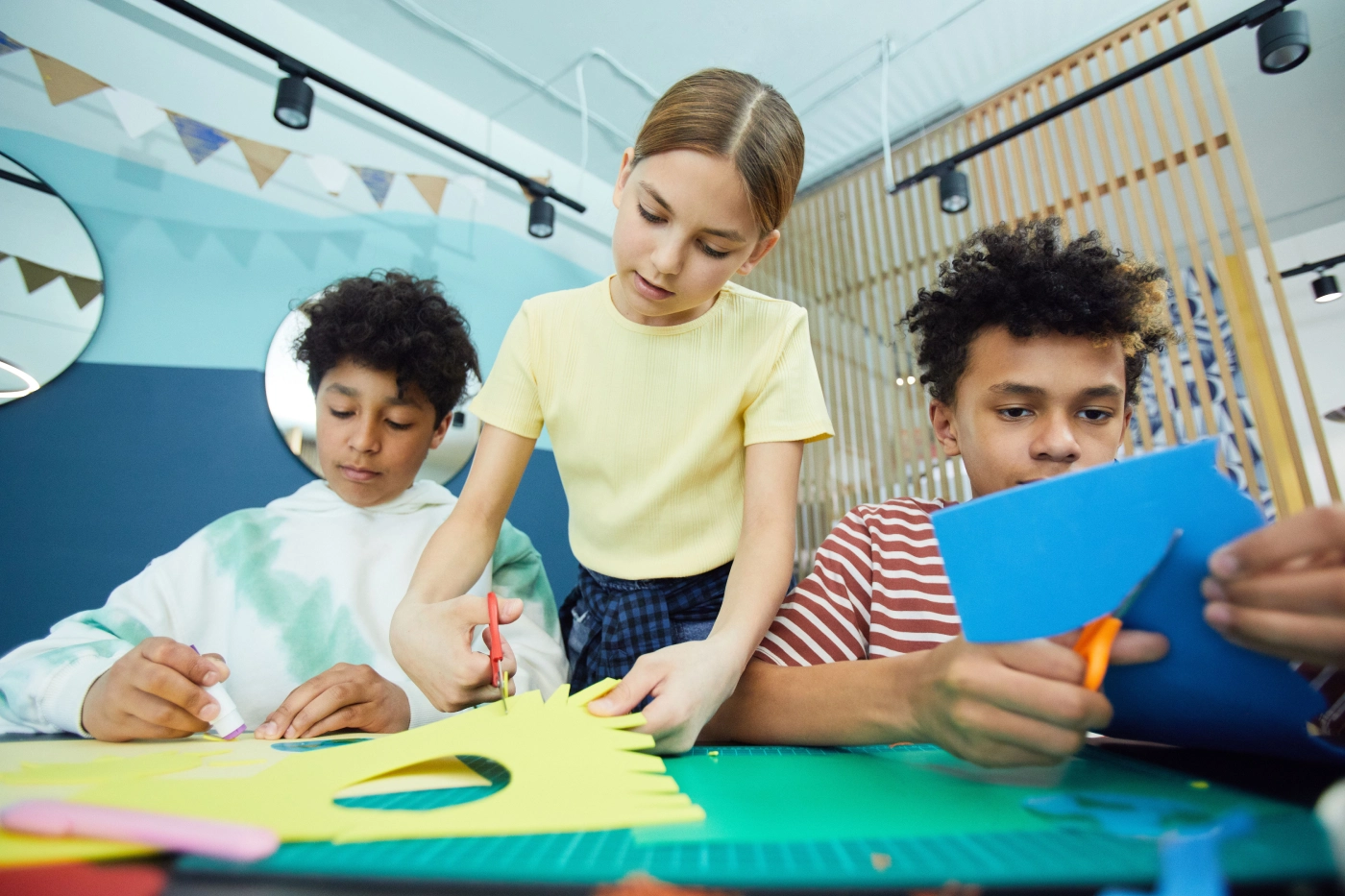
A decade ago, the skills considered essential for student success were relatively stable and familiar — strong literacy, numeracy, subject knowledge, and the discipline to apply them consistently. Today, the picture is considerably more complex.
The world students are preparing to enter is changing faster than any previous generation has experienced. Industries are being reshaped by automation and artificial intelligence. Career paths that were linear and predictable are becoming increasingly fluid. The ability to learn new things quickly, to function effectively in unfamiliar situations, and to recover from disruption without losing momentum has never been more important.
At the centre of all of these demands sits a single, fundamental skill: adaptability. This article explores what adaptability means for students, why it matters so profoundly in the world they are growing into, and how schools and families can actively develop it.
What Adaptability Actually Means for Students
Adaptability is sometimes described simply as ‘being flexible’ — which is true but insufficient. In an educational and developmental context, adaptability encompasses a cluster of interconnected qualities:
- Cognitive flexibility — the ability to shift thinking, consider alternative perspectives, and let go of approaches that are not working.
- Emotional resilience — the capacity to manage discomfort, uncertainty, and disappointment without being incapacitated by them.
- Learning agility — the ability to acquire new knowledge and skills quickly and to apply them in novel contexts.
- Openness to change — a mindset orientation that approaches the unfamiliar with curiosity rather than anxiety.
- Problem-solving under uncertainty — the ability to make reasonable decisions and take purposeful action even when the situation is ambiguous and the outcome is not guaranteed.
Together, these qualities define a student who can not only cope with change but actually thrive in it — someone who experiences new challenges as opportunities rather than threats.
Why the World Students Are Entering Demands Adaptability
The case for adaptability as a core educational priority rests on a clear-eyed look at what students will actually face in their professional and personal lives.
The Changing Nature of Work
The World Economic Forum’s Future of Jobs Report consistently identifies adaptability, complex problem-solving, and creativity among the skills most in demand across industries. At the same time, it projects that a significant proportion of job roles will be substantially transformed by automation within the next decade.
Students currently in school will enter a workforce where career paths are less linear, where roles evolve rapidly, and where the ability to learn new skills quickly — rather than simply deploying existing ones — will determine professional success. A student who has only learned to follow established procedures is far less prepared for this reality than one who has learned to adapt.
Global Interconnection and Cultural Complexity
The workplaces, communities, and relationships that today’s students will inhabit are increasingly diverse, globally connected, and culturally complex. Navigating this complexity with competence and respect requires adaptability — the ability to function effectively across different contexts, communication styles, and ways of thinking.
Technological Change
The pace of technological change is such that specific technical skills can become outdated within a few years of acquisition. The more durable advantage is the ability to learn new tools and systems quickly — a form of adaptability that rests on curiosity, cognitive flexibility, and a comfort with uncertainty.
Personal and Life Challenges
Beyond the professional sphere, adaptability matters deeply in personal life. Relationships change. Health circumstances shift. Family structures evolve. Communities transform. The students who develop genuine adaptability carry with them a quality that supports not just career success but personal wellbeing across the full complexity of a human life.
What Adaptability Looks Like in Practice at School
Adaptability is not an abstract quality — it shows up in specific, observable ways in the daily life of a student.
An adaptable student:
- Responds to a changed project brief or unexpected assignment with problem-solving rather than complaint.
- Recovers from a disappointing exam result by reviewing, adjusting their approach, and trying again.
- Engages productively with group members who think differently or work differently from themselves.
- Adjusts to a new teacher’s style without needing an extended period of resistance.
- Approaches an unfamiliar type of question in an exam with methodical reasoning rather than panic.
- Finds new solutions when their first approach to a problem does not work.
Each of these moments is both a demonstration of adaptability and an opportunity to develop it further. Schools that recognise and value these qualities — not just academic results — create conditions in which adaptability becomes a genuine part of student identity.
The Role of Mindset in Adaptability
Adaptability and mindset are inseparable. A student who believes that their abilities are fixed — that they are ‘a maths person’ or ‘not creative’ — will struggle to adapt when those self-assigned identities are challenged. A student who understands that every quality they have is capable of development — including their capacity to learn, to change, and to cope — brings an entirely different orientation to new and difficult situations.
Carol Dweck’s research on growth mindset maps almost exactly onto what we understand about adaptability: the students who grow most are those who believe growth is possible, who experience difficulty as meaningful rather than threatening, and who treat failure as a source of information rather than a verdict.
Developing a growth mindset is, in significant ways, developing the cognitive foundation for adaptability. The two cannot be separated in practice.
How Schools Can Build Adaptability Into Education
Schools that produce genuinely adaptable students do not leave this quality to chance — or assume it will develop through the general experience of school life. They design specific conditions that require and reward adaptability.
Project-Based and Inquiry-Led Learning
Projects that unfold in unpredictable ways — where students must navigate ambiguity, revise their approach in response to what they discover, and produce original work rather than replicate a template — are among the most effective contexts for building adaptability. The discomfort of genuine open-endedness, safely supported, is exactly the condition in which adaptive skills develop.
Cross-Curricular and Collaborative Learning
Working across subject boundaries and with diverse peers requires students to think flexibly, communicate across difference, and integrate knowledge from multiple domains. These experiences directly build the cognitive and social flexibility that underpins adaptability.
Iteration and Revision as Standard Practice
When schools treat first drafts as starting points rather than final products — when revision is built into the learning process rather than reserved for the most dedicated students — they normalise the kind of iterative, responsive approach to work that characterises genuine adaptability.
Teaching Students to Reflect on Their Own Learning
Metacognition — the awareness of how one learns — is a powerful driver of adaptability. Students who can identify what is and is not working in their approach to a task, and who can adjust their strategy accordingly, are demonstrating exactly the kind of learning agility that the changing world demands.
Families looking at best preschools in electronic city who want to give their children the strongest possible foundation often prioritise settings that build flexibility, resilience, and a genuine love of learning from the very earliest years — recognising that these qualities are far easier to cultivate in early childhood than to introduce later.
How Parents Can Develop Adaptability at Home
Adaptability begins long before formal school. The habits of mind and emotion that support it are shaped daily in family life.
- Allow natural consequences — when children face the results of their own choices in low-stakes situations, they develop the problem-solving and recovery skills that underpin adaptability.
- Resist over-scheduling — children who have unstructured time develop the capacity to create their own structures, solve their own boredom, and respond to open-ended situations with initiative rather than dependence.
- Narrate change positively — when plans change unexpectedly, your response models how to approach the unexpected. ‘This is different from what we planned — what shall we do with it?’ teaches flexible thinking in real time.
- Encourage new experiences — trying activities outside their comfort zone, meeting new people, travelling to unfamiliar places — all of these build the tolerance for novelty that is foundational to adaptability.
- Avoid protecting children from all difficulty — a child who has never had to recover from disappointment, navigate conflict, or try again after failure has not developed the emotional and cognitive resources that genuine adaptability requires.
Parents across Bengaluru who are thinking carefully about long-term preparation — not just immediate academic results — are increasingly seeking out Best schools in Bangalore that treat skills like adaptability, resilience, and collaborative thinking as core educational goals rather than secondary concerns.
Adaptability and Academic Performance: A Virtuous Cycle
It is worth noting explicitly that adaptability and academic performance are not in tension. Students who are more adaptable tend to be better academic performers — not in spite of their flexibility, but because of it.
They approach unfamiliar question types with methodical reasoning rather than avoidance. They respond to teacher feedback by adjusting their approach rather than defending their original position. They manage the disruption of changing syllabi, new teachers, and unexpected challenges more effectively than students whose sense of security depends on nothing ever changing.
Adaptability does not make students less focused or less rigorous. It makes their focus and rigour more durable — more capable of surviving contact with the genuine complexity and unpredictability of real learning.
Conclusion
The importance of adaptability skills for students in a changing world cannot be overstated. We are preparing young people not just for the world as it is today, but for a world that will continue to transform in ways we cannot fully predict. The students best positioned to thrive in that world are not necessarily those with the most content knowledge, but those with the flexibility, resilience, curiosity, and learning agility to keep growing long after formal education has ended.
Adaptability is not a trait some students have and others do not. It is a skill set — one that can be deliberately built through the choices schools make about how they teach, and the choices families make about how they raise their children. The investment begins now, and the returns last a lifetime.
Frequently Asked Questions
Q1. Is adaptability something that can genuinely be taught, or is it a personality trait?
Adaptability is a skill set — and like all skill sets, it can be deliberately developed. While some children may have natural temperamental advantages (higher tolerance for uncertainty, natural curiosity), the core components of adaptability, including cognitive flexibility, emotional resilience, and learning agility, can all be strengthened through deliberate teaching, modelling, and practice in both school and family settings. The evidence for this is strong and encouraging.
Q2. How do I know if my child struggles with adaptability?
Signs that a child may need more support with adaptability include intense distress when plans change unexpectedly, difficulty moving on from disappointments or failures, strong resistance to trying new things or meeting new people, rigid thinking patterns, and a tendency to give up quickly when an approach is not working. These patterns are common and addressable — they signal not a fixed limitation but an area where deliberate support will make a meaningful difference.
Q3. Does an emphasis on adaptability mean academic rigour is less important?
Not at all. Adaptability and academic rigour are complementary, not competing. In fact, the skills associated with adaptability — cognitive flexibility, persistence through difficulty, openness to feedback, and the ability to try new approaches — directly support stronger academic performance. Schools that develop both simultaneously produce students who are more capable in every academic context, not less.
Q4. At what age should schools begin teaching adaptability?
As early as possible — ideally from the preschool years. Young children who are allowed to navigate small challenges independently, who experience a range of activities and environments, and who are supported to recover from manageable upsets develop the emotional and cognitive foundations of adaptability early. By primary school, more explicit strategies such as growth mindset teaching, project-based learning, and reflective practice can build directly on this foundation.
Q5. How does adaptability connect to resilience?
Adaptability and resilience are closely related but distinct. Resilience is primarily about recovering from difficulty — bouncing back after a setback. Adaptability encompasses resilience but goes further — it is about actively adjusting, learning, and moving forward in response to change, not just recovering from it. A resilient student can cope with a disappointing result; an adaptable student can also change their approach and do something different next time. Both are essential, and both develop through similar conditions.