
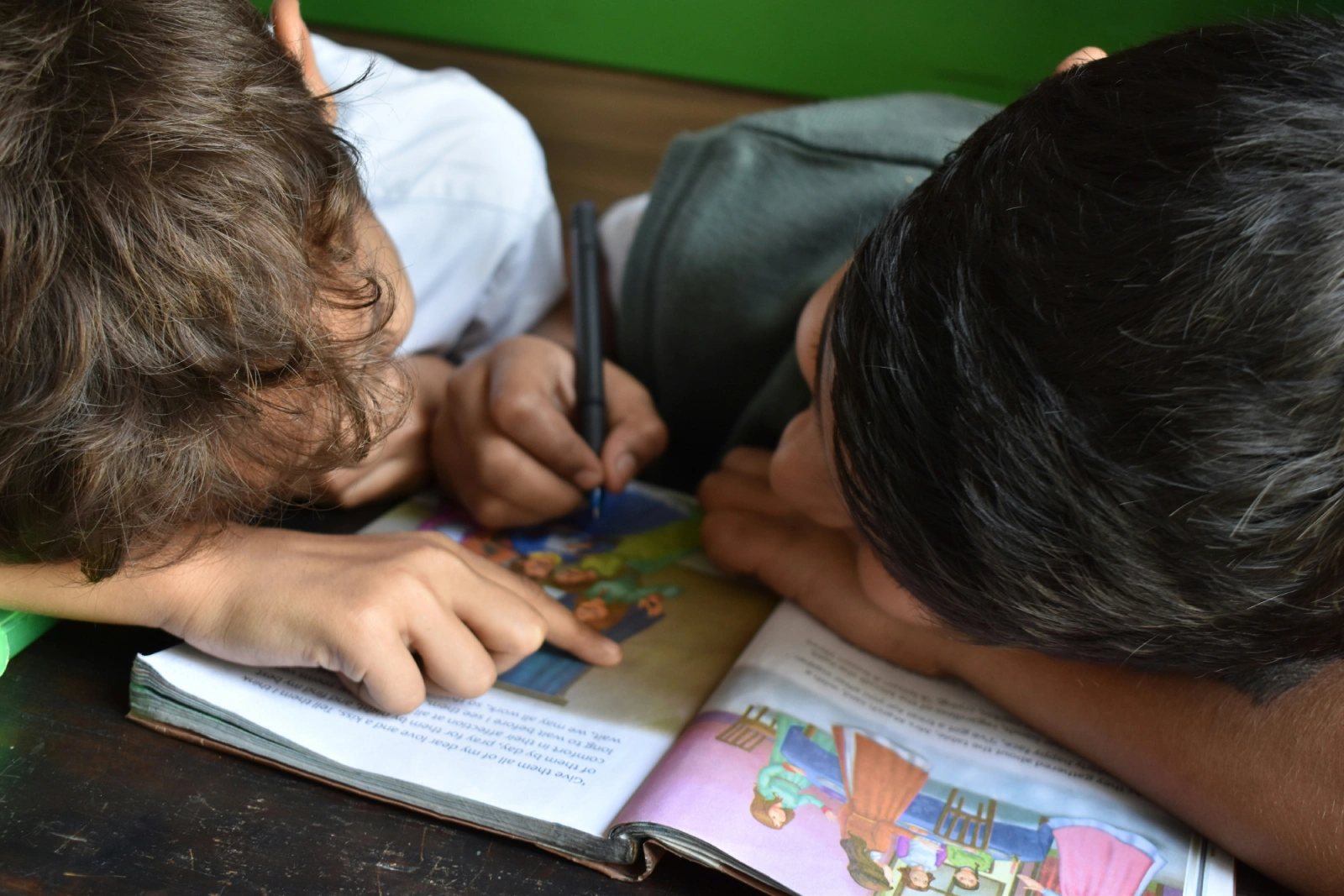
There is a common assumption among parents that reading aloud is something you do until a child can read independently — and then stop. Once the phonics are in place and the words are decoding reliably, the thinking goes, the job is done. The child can read for themselves now.
This assumption is one of the most significant missed opportunities in children’s education. The evidence is unambiguous: reading aloud to children benefits them at every age, from infancy through adolescence, and in ways that extend far beyond the development of basic literacy.
Vocabulary, comprehension, empathy, listening skills, emotional regulation, academic performance, and a genuine love of books are all positively affected by the shared experience of being read to — regardless of whether the child could read the same text independently.
Educators and families connected to the best CBSE schools in Bangalore understand this well. The schools that produce the strongest readers and thinkers are rarely those that focus solely on decoding skills — they are those that treat shared reading as a lifelong practice, not a transitional phase to be outgrown.
This blog explores the evidence behind reading aloud, why it matters at each stage of childhood, and how parents can make it a meaningful and sustainable part of family life at any age.
Why Reading Aloud Works: The Core Mechanisms
Several distinct developmental processes are at work when a child is read to by a caring adult. Understanding them helps explain why the practice is so consistently effective across such a wide range of outcomes.
Vocabulary Exposure Beyond Everyday Speech
Spoken language in everyday life, even in educated households, tends toward a relatively limited vocabulary. Written language — particularly in quality children’s literature — is significantly richer. When an adult reads aloud, the child is exposed to vocabulary they are unlikely to encounter in conversation: words used precisely, in meaningful context, at exactly the moment when they are ready to be absorbed.
Studies show that children who are read to regularly have measurably larger vocabularies than those who are not — and that vocabulary is one of the strongest single predictors of academic achievement across all subjects.
Modelling Fluent, Expressive Reading
When a skilled reader reads aloud, they demonstrate something that a child reading alone cannot observe: how a proficient reader interprets and performs a text. The pacing, the expression, the pauses for effect, the change of voice for different characters — all of these show the listening child what reading at its best sounds and feels like. This modelling shapes not just their reading ability but their understanding of what reading is for.
Building the Comprehension Skills That Decoding Cannot
Learning to decode words is a necessary skill, but it is not the same as reading with understanding. Comprehension requires a child to hold meaning across a text, make inferences, understand character motivation, identify themes, and respond emotionally to narrative. These are complex cognitive skills that develop through sustained engagement with stories — engagement that read-aloud provides in abundance.
The Benefits of Reading Aloud at Each Stage
Infancy and Toddlerhood (0–3 Years)
The benefits of reading aloud begin before a child understands a single word. The rhythm and melody of language, the experience of being held close while a parent’s voice rises and falls with a story, and the early exposure to the concept of a book as an object with meaning all lay foundational groundwork for later literacy.
By the toddler years, children are beginning to engage actively with picture books — pointing, naming, and making connections between images and the world they know. Read-aloud at this stage is as much about relationship as it is about language. The warmth and security of shared reading creates positive emotional associations with books that can last a lifetime.
The best Schools in Bangalore that offer strong early childhood programmes treat read-aloud as a core daily practice from the youngest age, recognising that these early experiences are not preparation for literacy — they are literacy, in its most foundational form.
Primary School Years (4–11 Years)
This is the period when many parents stop reading aloud — precisely when the benefits of the practice begin to expand most dramatically.
A child who is being read books above their own reading level encounters ideas, sentence structures, and vocabulary that they could not access independently. A parent who reads a chapter of a novel aloud each evening is giving their eight-year-old access to the full richness of literature — the complexity of plot, the depth of character, the emotional range of great storytelling — years before the child’s independent reading skills would take them there.
Children in this age group also benefit enormously from the conversations that read-aloud naturally generates. Pausing to discuss a character’s decision, predict what happens next, or connect the story to something in the child’s own life builds the higher-order comprehension skills that underpin academic success across every subject.
Families connected to quality best preschools in electronic city and primary schools in the area consistently hear from teachers that the children who arrive at school with the strongest literacy foundations are almost universally those who have been read to regularly at home — not necessarily those whose parents have drilled letter sounds.
Pre-Adolescence and Adolescence (12–18 Years)
This is the stage that surprises most parents most. Surely teenagers are too old to be read to?
The research says otherwise. Adolescents who are read to — by a parent, a teacher, or through the shared experience of audiobooks or classroom read-alouds — continue to benefit in ways that matter significantly at this stage of development.
Reading aloud with teenagers builds sophisticated vocabulary exposure, models academic prose, and — perhaps most importantly — creates a shared cultural and emotional experience between adult and young person that becomes increasingly rare as adolescents pull toward independence.
A parent and teenager who share a book — discussing it over dinner, debating its themes, arguing about its characters — are engaging in one of the most intellectually and relationally rich activities available to them. This is not nostalgia. It is a genuinely effective way to maintain connection and to keep a shared intellectual life alive during years when it can be difficult to find common ground.
How to Make Read-Aloud Work at Different Ages
Keep It Pleasurable, Not Prescriptive
The moment read-aloud becomes an obligation or a lesson, it loses much of its power. The goal is pleasure in the experience of story — so let the child have genuine input into what is read, follow their lead on pacing, and stop if the book is not working for either of you. There is no virtue in finishing a book that has stopped being enjoyable.
Choose Books That Stretch
One of the great freedoms of read-aloud is that the adult is doing the decoding. This means you can choose books significantly above the child’s independent reading level. For a seven-year-old who reads at a typical seven-year-old level, being read a book written for ten-year-olds is a developmental gift — access to richer vocabulary, more complex ideas, and more layered storytelling than they could reach alone.
Create a Reliable Time and Ritual
Read-aloud works best when it is a predictable, protected part of the day. Bedtime is the classic choice for good reason — it creates calm, signals the end of the day’s demands, and associates books with comfort and security. But the specific time matters less than the consistency.
Among the Montessori schools in Bangalore that are most respected for their literacy outcomes, daily read-aloud is treated as a non-negotiable part of the school programme — not a reward or a filler activity, but a core learning experience deserving dedicated, protected time.
Conclusion: Never Stop Reading Aloud
The evidence is clear, the practice is simple, and the benefits span a lifetime of development. Reading aloud to children — at every age, consistently, and with genuine pleasure — is one of the highest-return investments a parent or teacher can make in a child’s education and wellbeing.
It costs nothing beyond time and a good book. It builds vocabulary, comprehension, empathy, and love of literature. It creates connection between adult and child. And it plants the seeds of a relationship with reading that can sustain a person through every season of their life.
So if you stopped reading aloud when your child learned to read independently — pick a book tonight. It is never too late to start again.
Frequently Asked Questions
Q1. At what age should I stop reading aloud to my child?
The research suggests: never, or at least not before the child themselves signals they have had enough. Many families who read aloud together regularly find that even teenagers continue to enjoy and benefit from the practice. The age at which a child learns to read independently is not a signal to stop — it is simply the moment when they have a new tool available alongside being read to.
Q2. Should I choose books that are above my child's reading level when reading aloud?
Yes, and this is one of the great advantages of read-aloud. Since the adult is decoding, the child has full cognitive capacity available for comprehension, imagination, and vocabulary absorption. Choosing books one to three levels above the child’s independent reading level maximises the developmental benefit of the read-aloud session.
Q3. How long should a read-aloud session be?
For young children, ten to fifteen minutes is often sufficient and sustainable. For primary-age children, twenty to thirty minutes allows for a meaningful chunk of narrative. For older children and teenagers, a chapter or two — however long that takes — tends to work well. The goal is to stop while the child still wants more, not when they are visibly restless.
Q4. What if my child wants to read along silently while I read aloud?
This is a wonderful practice and doubles the benefit. Following the text with their eyes while hearing it read aloud reinforces decoding, phrasing, and expression simultaneously. If your child enjoys reading along, consider sharing a copy of the book between you, or looking for dual-copy editions of longer chapter books.
Q5. Are audiobooks a reasonable substitute for parent read-aloud?
Audiobooks have real value — they expose children to professional narration, sophisticated vocabulary, and full-length stories. However, they do not replicate the relationship dimension of parent read-aloud: the pauses to discuss, the shared reactions, the closeness of reading together. Audiobooks work best as a supplement to, rather than a replacement for, the shared read-aloud experience between parent and child.