
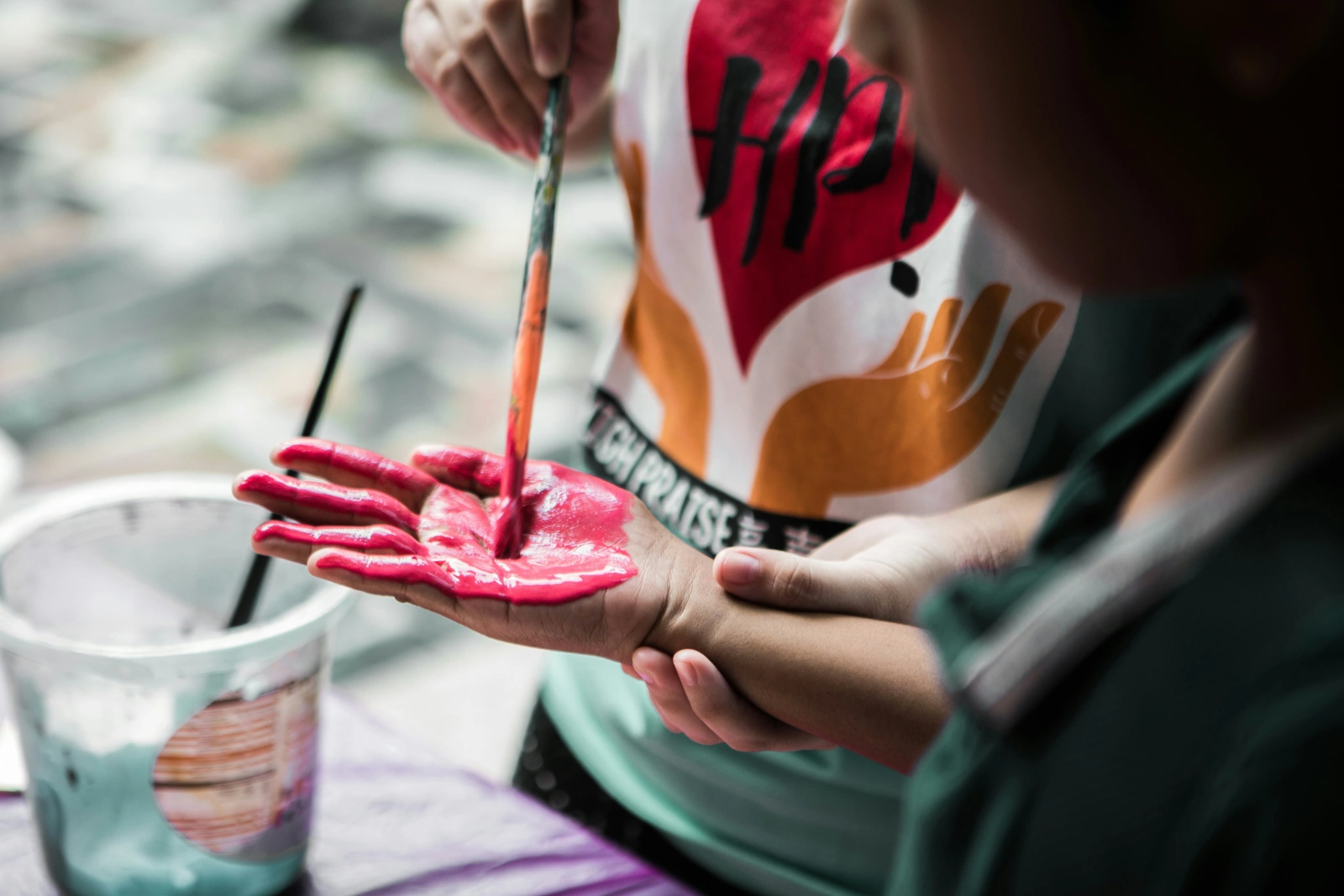
In the rush to fill children’s afternoons with tuition, coaching classes, and academic enrichment, one of the simplest and most powerful developmental tools available to families often gets overlooked: the hobby. Not a scheduled, assessed, performance-oriented activity — but a genuine, self-chosen pursuit that a child does simply because they love it.
The benefits of hobbies in childhood extend far beyond the obvious. A child who paints, builds models, plays chess, tends a garden, writes stories, or learns a musical instrument is not just developing that specific skill. They are building identity, resilience, self-regulation, creativity, and the kind of intrinsic motivation that underpins lifelong learning — qualities that no curriculum alone can fully develop.
Families looking for the Best schools in Bangalore for their children rightly evaluate academic programmes, teaching quality, and facilities. But the richest learners are almost always children whose lives include meaningful pursuits beyond the school day — children for whom learning does not stop at the gate.
This blog explores what hobbies genuinely do for children, why they matter as much as formal education, and how parents can help their child discover and sustain one.
What a Hobby Actually Is — and What It Is Not
A hobby, in the truest sense, is a self-directed pursuit that a child engages in primarily for the pleasure and satisfaction it brings. It is distinct from:
- Tuition or coaching classes, which are adult-directed and outcome-oriented
- Organised sport at a competitive level, which involves external pressure and performance metrics
- Screen-based entertainment, which is typically passive rather than creative or skill-building
A genuine hobby has a particular quality: the child returns to it voluntarily, not because they have to, but because it gives them something — a sense of flow, mastery, creative expression, or simply deep enjoyment.
This voluntary, intrinsically motivated engagement is precisely what makes hobbies so developmentally powerful. The child is the author of the activity, not a participant in someone else’s programme.
The Developmental Benefits of Hobbies
Identity Formation
One of the most important developmental tasks of childhood and adolescence is the formation of a stable, positive sense of identity. Hobbies contribute powerfully to this process. A child who thinks of themselves as ‘someone who draws’ or ‘a reader’ or ‘someone who builds things’ has an anchor for their self-concept that is independent of academic performance.
This matters enormously when academic results are difficult or disappointing. A child with a strong hobby-based identity has resources to draw on that a child defined only by their grades does not. They know what they are good at, what they love, and who they are — independently of how any particular exam went.
Resilience and Perseverance
Hobbies involve challenge. Learning an instrument means spending months producing sounds that are far from beautiful. Improving at chess means losing many games. Gardening means watching something you planted fail to grow. These experiences of sustained effort in the face of difficulty — without adult pressure or graded assessment — build genuine resilience.
The child who persists with a difficult passage on the piano, or keeps returning to a sketch that is not yet right, is practising the same perseverance muscle that will serve them through academic challenges, professional setbacks, and personal difficulties throughout their life.
Educators at the leading Montessori schools in Bangalore often observe that children who have genuine, self-chosen hobbies outside school tend to show greater persistence inside the classroom as well — the connection between intrinsic motivation and academic stamina is real and well-documented.
Creativity and Imagination
Creative hobbies — writing, drawing, building, making music, crafting — are among the richest environments for imaginative thinking available to children. Unlike structured academic tasks with right and wrong answers, creative pursuits have no ceiling and no single correct approach.
Children who regularly engage in creative hobbies develop divergent thinking — the capacity to generate multiple solutions and perspectives — which is increasingly recognised as one of the most valuable cognitive skills for academic success, professional life, and personal wellbeing.
Emotional Regulation and Stress Relief
The school day carries a sustained load of social and academic pressure. Children who have a hobby they can turn to after school have a proven, healthy outlet for that accumulated stress.
Research consistently shows that engaging in a personally meaningful creative or physical pursuit reduces cortisol levels, improves mood, and supports emotional regulation. Children who have this kind of reliable decompression tend to arrive at school the following day in better emotional shape than those who move from school to screen without any intervening absorption in something they love.
Hobbies and Academic Performance: A Surprising Connection
It might seem counterintuitive that time spent away from studying could improve academic outcomes. But the evidence points in exactly this direction.
Children with hobbies tend to:
- Have stronger executive function — the capacity to plan, focus, and manage their own behaviour
- Show higher intrinsic motivation in academic settings, having practised the feeling of doing something for its own sake
- Perform better in creative and analytical tasks, because hobbies build the thinking muscles that these tasks require
- Report lower levels of school-related anxiety, because their self-worth is not entirely dependent on academic performance
A child who spends their evenings in genuine, absorbing pursuit of something they love is not falling behind academically. They are building the very foundations that make sustained academic effort possible.
Among the cbse schools in electronic city and surrounding areas that families consistently regard highly, schools that encourage students to pursue genuine outside interests — and create space to share and celebrate those pursuits — tend to produce more engaged, balanced, and academically motivated learners.
How to Help Your Child Find and Sustain a Hobby
Expose, Don’t Prescribe
The most effective approach to hobby discovery is wide exposure without pressure. Take your child to a music concert, an art exhibition, a chess tournament, a gardening club, a robotics workshop, and a pottery class. Let them encounter many possibilities before settling on one. Avoid the temptation to push them toward a pursuit you value or once enjoyed yourself.
Allow Enough Time for Boredom
Children who are perpetually scheduled rarely have the space to discover what they genuinely love. Boredom — real, unresolved, screen-free boredom — is often where hobby discovery begins. When a child has nothing to do and reaches for something to fill that space out of genuine impulse, that impulse is worth paying attention to.
Provide Resources Without Pressure
Once a child shows interest in something, provide the basic materials and access they need without immediately loading the activity with expectations or objectives. A child who wants to draw needs paper and pencils, not an art class they are required to attend every Saturday.
Celebrate the Process, Not the Product
Resist the urge to display, publish, or perform your child’s hobby efforts before they are ready. The most important thing about a hobby is what it does for the child internally — and that internal richness can be damaged by premature external scrutiny. Let the activity belong to the child first.
Parents near schools in electronic city and surrounding areas looking for school environments that genuinely support the whole child will find that the strongest programmes actively build time, space, and cultural value around children’s pursuits beyond the academic curriculum.
Conclusion: A Life Worth Living Starts With Loving Something
The child who leaves school with excellent grades and no genuine interests has received an incomplete education. The child who leaves school with a love of something — a craft, a discipline, a creative pursuit, a practice they have made their own — has received something that cannot be measured but that will sustain them across every chapter of life that follows.
Hobbies outside the classroom are not a luxury for when the real work is done. They are, in a very real sense, some of the most important work of childhood. Give your child the time, the exposure, and the freedom to find one — and then protect that space fiercely.
Frequently Asked Questions
Q1. What if my child wants to change their hobby frequently?
This is very common, particularly in younger children, and is generally healthy. Sampling many activities is how children discover what genuinely resonates. Some degree of encouragement to persist past the initial learning curve is reasonable — many children give up an activity just before it starts becoming genuinely enjoyable. But forcing a child to continue a hobby they clearly dislike defeats the purpose entirely.
Q2. How do I balance hobby time with homework and academic commitments?
Treat hobby time as a non-negotiable part of the weekly schedule, not something that happens only when academic work is finished. Research suggests that children who have consistent, protected time for self-directed pursuits actually manage their academic work more effectively — not less. The hobby is not competing with learning; it is supporting it.
Q3. Are screen-based activities like gaming valid hobbies?
Some screen-based activities have genuine hobby qualities — game design, coding, digital art, and story-based games that involve creative decision-making all have developmental value. Passive consumption of content does not. The test is whether the activity is creative, skill-building, and intrinsically motivated — or simply absorbing attention without building anything.
Q4. My child says they are not interested in anything. What should I do?
This is often a signal that the child has not yet encountered enough variety, or that they are so accustomed to structured, assessed activities that self-directed interest feels unfamiliar. Reduce scheduled time, increase unstructured exploration, and follow even small sparks of interest with genuine curiosity. ‘You seemed to enjoy that — want to try more of it?’ is a low-pressure invitation that can open doors.
Q5. Is it better for a child to go deep into one hobby or explore many?
Both have value at different stages. Younger children benefit from wide exposure and breadth of experience. As children move through primary and into secondary school, going deeper into one or two areas provides the experience of genuine mastery, which has its own important developmental benefits. Neither breadth nor depth is inherently superior — what matters is genuine engagement, whatever form it takes.